NeuroStar® TMS Therapy

  1. Home
  2. Services
  3. NeuroStar TMS

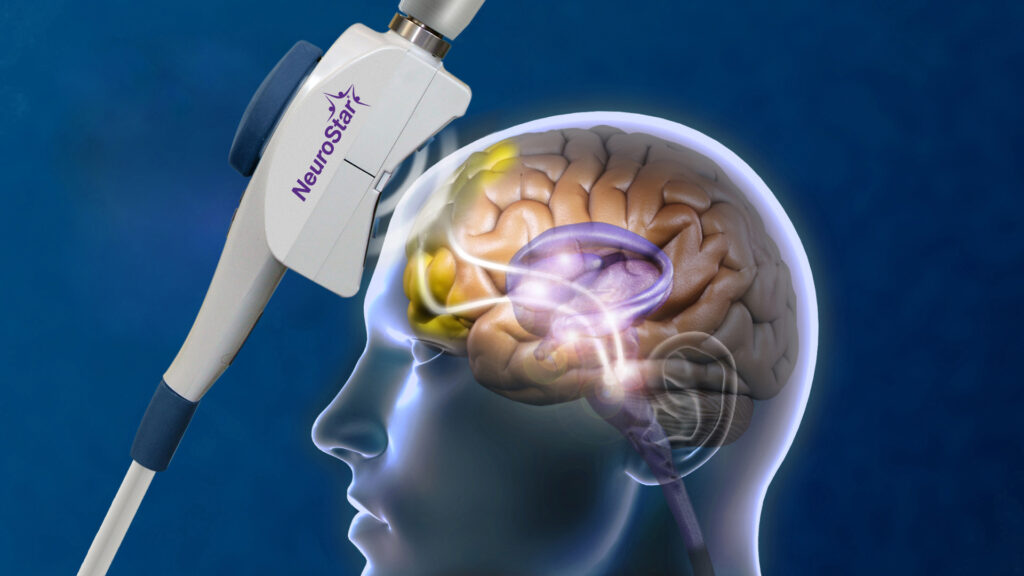
NeuroStar® uses transcranial magnetic stimulation (TMS) to stimulate specific areas of the brain that are underactive in people with depression. Unlike electroconvulsive therapy (ECT), TMS is non-invasive and does not require anesthesia or cause memory loss.

While the exact cause of depression remains unclear, the leading scientific theory suggests it involves an imbalance in the brain’s neurotransmitters, the chemical messengers that help regulate mood by carrying signals between brain cells. TMS is typically used when antidepressant medications haven’t been effective, have stopped working, or as an alternative to medication.

Why choose NeuroStar® TMS

A safe, proven, medication-free treatment delivered in our calm Cos Cob office.
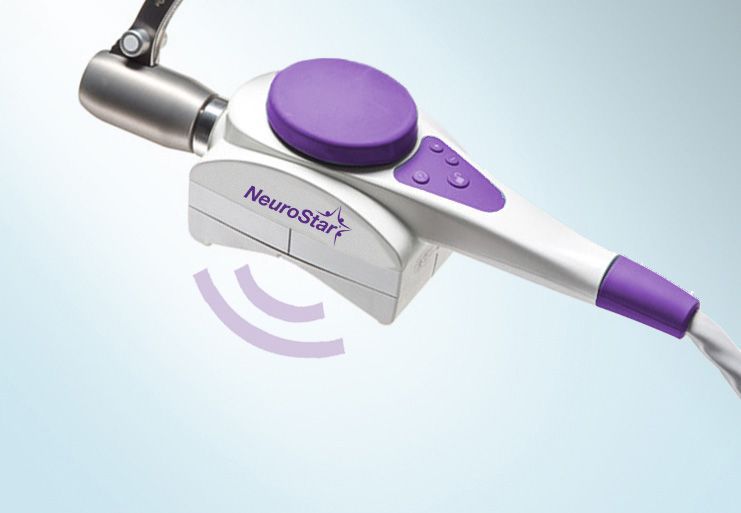
NeuroStar TMS treatment coil

No memory loss

NeuroStar® TMS is not ECT. You stay awake and alert, with no effect on memory.

Drive yourself

Most patients drive themselves to and from sessions and resume their normal routine right after.

How does NeuroStar® TMS treatment work?

NeuroStar delivers targeted magnetic stimulation to areas of the brain that regulate mood. A typical initial course is one session a day over 4 to 6 weeks.

Before treatment

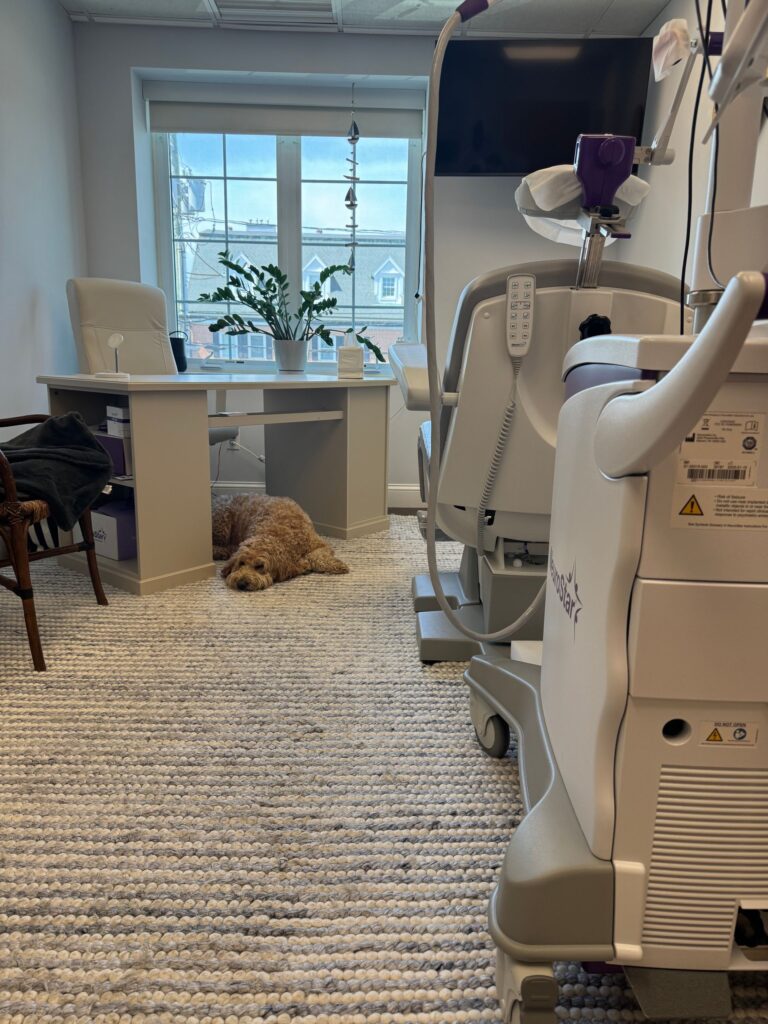
You’re seated comfortably in the treatment chair, and a small, curved magnetic coil is gently positioned on your head.

01

During treatment

You’ll hear a clicking sound and feel a light tapping on your head as NeuroStar delivers precise magnetic pulses.

02

After treatment

Each session lasts 19 to 37 minutes, based on your provider’s advice. You can return to your regular activities right away.

03

The science behind NeuroStar® TMS

What happens in the brain during depression

Depression is linked to changes in how the brain circuits that regulate mood, attention and emotion communicate. Brain imaging studies show that during depression, activity is often reduced in parts of the prefrontal cortex involved in focus, planning and emotional control, including the dorsolateral prefrontal cortex (DLPFC), while deeper limbic regions tied to sadness, such as the subgenual cingulate, tend to be overactive.[1, 2] These regions work like a see-saw: in brain imaging, recovery from depression is accompanied by the reverse pattern, with limbic activity falling and prefrontal activity rising.[1] Depression has also been linked to changes within the medial prefrontal “default mode” network, which is involved in self-focused thinking and rumination.[3, 4]

How NeuroStar® TMS works

NeuroStar uses a curved wire coil, positioned against the scalp over the left DLPFC, to generate a pulsed magnetic field. The field passes painlessly through the scalp and skull and changes the excitability of nerve cells in the targeted area. Repeated sessions can produce lasting effects that researchers believe reflect the brain’s ability to adapt and rewire, known as neuroplasticity.[5] In the large multisite randomized trial of this approach, treatment was given five days a week for 4 to 6 weeks, at 10 pulses per second and 3,000 pulses per session.[6] Today, NeuroStar sessions last about 19 to 37 minutes, depending on the protocol your provider recommends.

How TMS may help rebalance mood networks

TMS appears to work through the brain networks connected to the stimulation site, not just the spot under the coil. Research found that left DLPFC sites with the best clinical results are those most strongly “anticorrelated” with the subgenual cingulate, meaning the two regions normally work in opposition.[7] In patients imaged before and after a 5-week course of TMS, treatment normalized overactive connectivity between the subgenual cingulate and the default mode network, and strengthened the opposing relationship between the DLPFC and medial prefrontal regions.[4] A review of imaging research found that clinical improvement is linked to changes in regions distant from the stimulation site, and that TMS may help normalize relationships between brain networks.[8] Scientists are still studying the exact mechanism, and these imaging studies are relatively small, but together they help explain how stimulation of one area can influence mood circuits throughout the brain.

Clinical outcomes and long-term durability

  • Randomized trials. In a sham-controlled trial of 301 medication-free patients who had not benefited from prior treatment, active TMS to the left DLPFC was significantly more effective than sham, with remission rates about twice as high at 6 weeks and mostly mild, temporary scalp discomfort as a side effect.[6] A separate NIH-funded multisite trial confirmed that daily left prefrontal TMS was superior to sham.[9]
  • Real-world practice. In a 42-site study of 307 patients whose depression persisted despite antidepressants, the clinician-rated response rate was 58% and the remission rate was 37%.[10]
  • The NeuroStar Outcomes Registry. In the largest registry of clinical outcomes in depression for any treatment, response rates ranged from 58% to 83% and remission rates from 28% to 62%, depending on the rating scale and patient group. By clinician rating (CGI-S), 83% of patients responded to an acute course of NeuroStar and 62% reached remission; patient-rated rates were lower.[11, 12]
  • 12-month durability. In a one-year follow-up of 257 patients who completed TMS, improvement was sustained throughout the year. Of the 120 patients who responded or remitted, 62.5% continued to meet response criteria through 12 months, while continuing medication and with access to additional TMS sessions if symptoms returned (about 36% of patients received some retreatment).[13]
  • Clinical guidelines. International evidence-based guidelines rate high-frequency TMS of the left DLPFC, the approach NeuroStar uses, as having definite efficacy (Level A) for depression.[14]

Individual results may vary. TMS is not right for everyone, and a consultation with our team can help determine whether NeuroStar® TMS is appropriate for you.

What results can I expect?

Many people notice gradual improvement over the course of treatment, though every person responds differently. See “Clinical outcomes and long-term durability” above for the research, including the NeuroStar Outcomes Registry and 12-month follow-up data. Individual results may vary.

NeuroStar® TMS FAQ

TMS is a noninvasive procedure that uses magnetic fields to stimulate nerve cells in the brain to improve symptoms of depression. It is typically used when antidepressant medications haven’t been effective, have stopped working, or as an alternative to medication.

A typical initial course of treatment is about 19 to 37 minutes daily over 4 to 6 weeks.

A vast majority of commercial and Medicare plans have recognized the effectiveness of treating depression with TMS Therapy and now cover it. We verify your benefits before you begin.

TMS does not circulate in the blood, so it does not have side effects like weight gain, sexual dysfunction, nausea, dry mouth or sedation. The most common side effects in clinical trials were headache and scalp discomfort, generally mild to moderate and less frequent after the first week.

No. TMS uses pulsed magnetic fields similar in intensity to an MRI. This differs from low-intensity static magnets, which deliver weak, undirected fields that are not capable of activating brain cells.
Sources

  1. Mayberg HS, Liotti M, Brannan SK, et al. Reciprocal limbic-cortical function and negative mood: converging PET findings in depression and normal sadness. Am J Psychiatry. 1999;156(5):675-682. PubMed 10327898 · doi:10.1176/ajp.156.5.675
  2. Koenigs M, Grafman J. The functional neuroanatomy of depression: distinct roles for ventromedial and dorsolateral prefrontal cortex. Behav Brain Res. 2009;201(2):239-243. PubMed 19428640 · doi:10.1016/j.bbr.2009.03.004
  3. Drevets WC, Price JL, Furey ML. Brain structural and functional abnormalities in mood disorders: implications for neurocircuitry models of depression. Brain Struct Funct. 2008;213(1-2):93-118. PubMed 18704495 · doi:10.1007/s00429-008-0189-x
  4. Liston C, Chen AC, Zebley BD, et al. Default mode network mechanisms of transcranial magnetic stimulation in depression. Biol Psychiatry. 2014;76(7):517-526. PubMed 24629537 · doi:10.1016/j.biopsych.2014.01.023
  5. Klomjai W, Katz R, Lackmy-Vallée A. Basic principles of transcranial magnetic stimulation (TMS) and repetitive TMS (rTMS). Ann Phys Rehabil Med. 2015;58(4):208-213. PubMed 26319963 · doi:10.1016/j.rehab.2015.05.005
  6. O’Reardon JP, Solvason HB, Janicak PG, et al. Efficacy and safety of transcranial magnetic stimulation in the acute treatment of major depression: a multisite randomized controlled trial. Biol Psychiatry. 2007;62(11):1208-1216. PubMed 17573044 · doi:10.1016/j.biopsych.2007.01.018
  7. Fox MD, Buckner RL, White MP, Greicius MD, Pascual-Leone A. Efficacy of transcranial magnetic stimulation targets for depression is related to intrinsic functional connectivity with the subgenual cingulate. Biol Psychiatry. 2012;72(7):595-603. PubMed 22658708 · doi:10.1016/j.biopsych.2012.04.028
  8. Philip NS, Barredo J, Aiken E, Carpenter LL. Neuroimaging mechanisms of therapeutic transcranial magnetic stimulation for major depressive disorder. Biol Psychiatry Cogn Neurosci Neuroimaging. 2018;3(3):211-222. PubMed 29486862 · doi:10.1016/j.bpsc.2017.10.007
  9. George MS, Lisanby SH, Avery D, et al. Daily left prefrontal transcranial magnetic stimulation therapy for major depressive disorder: a sham-controlled randomized trial. Arch Gen Psychiatry. 2010;67(5):507-516. PubMed 20439832 · doi:10.1001/archgenpsychiatry.2010.46
  10. Carpenter LL, Janicak PG, Aaronson ST, et al. Transcranial magnetic stimulation (TMS) for major depression: a multisite, naturalistic, observational study of acute treatment outcomes in clinical practice. Depress Anxiety. 2012;29(7):587-596. PubMed 22689344 · doi:10.1002/da.21969
  11. Sackeim HA, Aaronson ST, Carpenter LL, et al. Clinical outcomes in a large registry of patients with major depressive disorder treated with Transcranial Magnetic Stimulation. J Affect Disord. 2020;277:65-74. PubMed 32799106 · doi:10.1016/j.jad.2020.08.005
  12. Neuronetics, Inc. NeuroStar clinical evidence (registry clinician-rated CGI-S outcomes and 12-month durability data). https://neurostar.com/hcp/evidence
  13. Dunner DL, Aaronson ST, Sackeim HA, et al. A multisite, naturalistic, observational study of transcranial magnetic stimulation for patients with pharmacoresistant major depressive disorder: durability of benefit over a 1-year follow-up period. J Clin Psychiatry. 2014;75(12):1394-1401. PubMed 25271871 · doi:10.4088/JCP.13m08977
  14. Lefaucheur JP, Aleman A, Baeken C, et al. Evidence-based guidelines on the therapeutic use of repetitive transcranial magnetic stimulation (rTMS): an update (2014-2018). Clin Neurophysiol. 2020;131(2):474-528. PubMed 31901449 · doi:10.1016/j.clinph.2019.11.002
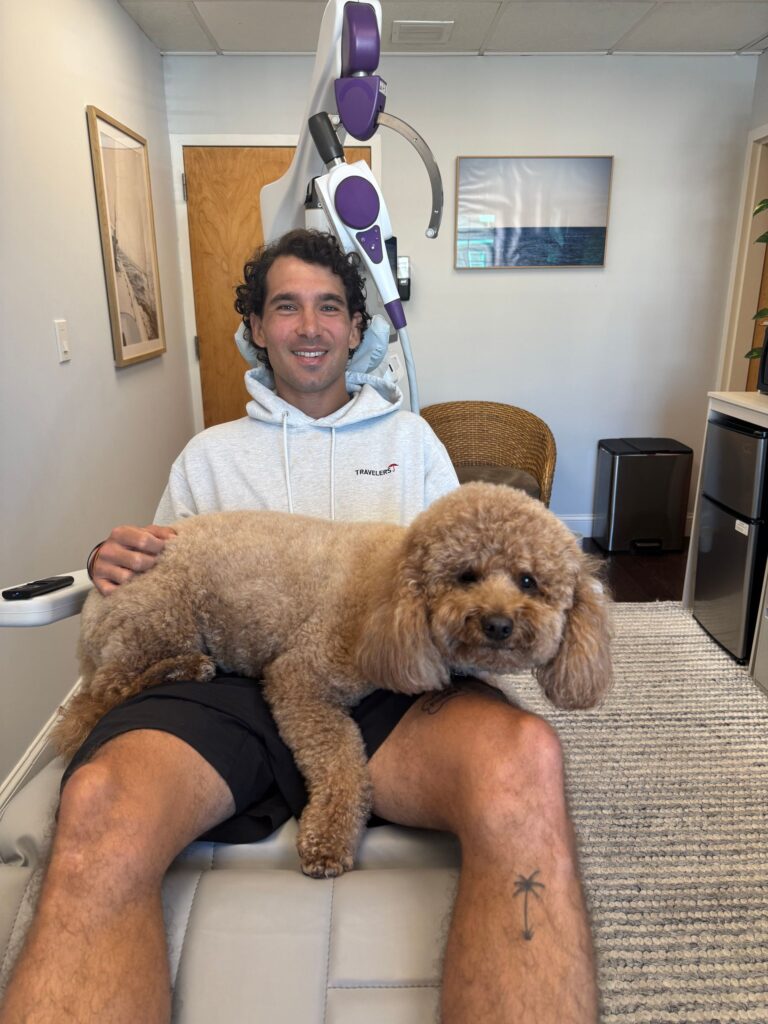
TMS Greenwich patient with therapy dog during NeuroStar session

Free discovery call

Find out if NeuroStar® TMS is right for you

Schedule a free, no-obligation discovery call, or start with our short online TMS self-assessment.